
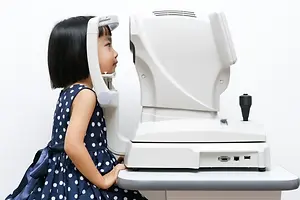
Healthy Vision Supports Learning, Development & Confidence
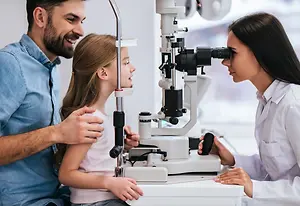
Vision Plays a Bigger Role Than Many Parents Realize
Children rely on their vision throughout nearly every part of the day. Reading, writing, classroom participation, sports, and digital learning all depend on healthy visual function.
When a vision problem develops, children often assume everyone sees the world the same way they do. Because symptoms may develop gradually, many children never report a problem.
Regular pediatric eye exams help identify concerns before they begin affecting learning, development, or everyday activities.
Eye Exams Help Support:
- Academic performance
- Reading and comprehension
- Hand-eye coordination
- Athletic performance
- Visual development
- Long-term eye health
Why Children Need Regular Eye Exams
School vision screenings serve an important purpose, but they are not a substitute for a comprehensive eye exam.
Most screenings primarily evaluate distance vision. They may not detect problems involving eye coordination, focusing ability, eye health, prescription changes, or developing eye diseases.
A comprehensive pediatric eye exam evaluates how your child's eyes function together while also monitoring their overall eye health.
Regular exams allow us to:
- Detect vision problems early
- Monitor visual development
- Identify prescription changes
- Screen for common childhood eye conditions
- Establish a baseline for future care
Signs Your Child May Need an Eye Exam
Parents should consider scheduling an eye exam if their child experiences:
- Squinting
- Frequent headaches
- Holding books very close
- Sitting close to screens
- Difficulty concentrating while reading
- Losing their place while reading
- Excessive eye rubbing
- Blurry vision
- Double vision
- Poor reading performance
- Avoidance of reading or schoolwork
- Complaints of eye fatigue
Even if no symptoms are present, routine eye exams remain an important part of preventive healthcare.
What Happens During a Pediatric Eye Exam?
Children deserve the same thorough care as adults, delivered in a comfortable, age-appropriate environment.
We assess how clearly your child sees at both distance and near while evaluating overall visual function.
Testing determines whether nearsightedness, farsightedness, or astigmatism may be affecting your child's vision.
The health of the retina, optic nerve, cornea, and surrounding structures is carefully evaluated.
We evaluate how well the eyes work together and screen for conditions such as strabismus and binocular vision disorders.
We review findings, answer questions, and discuss any recommended treatment or monitoring plans.
Common Childhood Vision Conditions We Screen For
Myopia (Nearsightedness)
Early identification allows us to monitor progression and discuss treatment options that may help slow worsening vision.
Amblyopia (Lazy Eye)
Amblyopia occurs when one eye fails to develop normal visual acuity. Early treatment offers the greatest opportunity for improvement.
Strabismus (Eye Misalignment)
When the eyes do not properly align, visual development may be affected. Early diagnosis allows for timely intervention.
Astigmatism & Other Refractive Errors
Prescription changes can impact learning, focus, and visual comfort throughout the day.
Myopia Screening and Early Detection
Children with myopia often have difficulty seeing distant objects clearly while maintaining clear near vision. Unfortunately, myopia frequently progresses as children grow.
Research shows that higher levels of myopia may increase the risk of serious eye conditions later in life.
Pediatric eye exams allow us to:
- Identify myopia early
- Monitor progression
- Track prescription changes
- Discuss treatment options
- Support long-term eye health
Give Your Child a Strong Foundation for Healthy Vision
Clear vision supports learning, development, confidence, and everyday success. Regular pediatric eye exams help identify concerns early and provide the foundation for lifelong eye health.
Whether your child is preparing for school, experiencing vision changes, or due for a routine exam, our team is here to help protect their vision for the future.