

Looking for an Alternative to Traditional Contact Lenses?
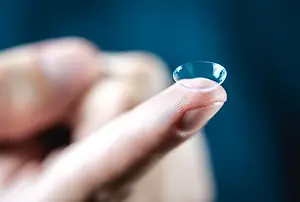
Specialty Contact Lens Fitting in Austin
Specialty contact lenses are designed for patients who need a more customized approach to vision correction. At Anderson Lane Vision Source, we offer specialty contact lens fitting in Austin for keratoconus, irregular corneas, high prescriptions, dry eye, and other conditions that can make standard contact lenses difficult to wear. As an optometrist for scleral lenses in Austin, our team provides expert fittings for patients who need more than a standard lens solution.
Could Specialty Contact Lenses Be Right for You?
Specialty contact lenses may be recommended for patients with:
- Keratoconus
- Irregular corneas
- High prescriptions
- Dry eye symptoms
- Previous contact lens discomfort
- Reduced vision with standard contact lenses
A specialty contact lens evaluation helps us determine which lens designs may provide the best combination of vision, comfort, and fit.
Why Do So Many Patients Ask About Scleral Lenses?
Why Some Patients Benefit From RGP Lenses
Rigid gas-permeable (RGP) lenses offer a firm lens surface that maintains its shape while on the eye.
This design can provide:
- Sharper vision for certain prescriptions
- Improved visual quality for some corneal conditions
- Durable long-term lens performance
- Customized fitting options for more complex vision needs
RGP lenses are often recommended when soft contact lenses do not provide the desired visual results.
Living With Keratoconus? Specialty Lenses May Help
Keratoconus causes the cornea to gradually change shape, which can make vision difficult to correct with glasses or traditional contact lenses.
Specialty contact lenses help create a more regular optical surface, allowing light to focus more accurately on the retina.
For many patients with keratoconus, specialty lenses can provide:
- Improved visual clarity
- Better vision stability
- Enhanced daily function
- An alternative to relying solely on glasses
Dry Eyes Don't Always Mean Giving Up Contact Lenses
Dry eye symptoms can make contact lens wear uncomfortable, but they do not always prevent patients from wearing contacts successfully.
Certain specialty lens designs help protect the eye's surface and maintain moisture throughout the day.
Depending on your individual needs, specialty lenses may help:
- Reduce lens-related irritation
- Improve comfort during wear
- Support healthier tear film function
- Extend comfortable wearing time
Our team evaluates both eye health and lens fit to determine whether specialty lenses may be a good option.
Finding the Right Lens Starts With the Right Measurements
Specialty contact lenses require more than a standard contact lens exam.
We take detailed measurements of your eyes and evaluate factors such as corneal shape, tear quality, prescription requirements, and overall eye health. These measurements help us select lens designs that fit properly and perform as intended.
Because specialty lenses are highly individualized, follow-up visits are often part of the fitting process to ensure optimal results.
Let's Find Out Which Contact Lenses Are Right for You
If you've struggled with traditional contact lenses or have been diagnosed with keratoconus, dry eye, or another condition affecting contact lens wear, specialty contact lenses may provide an alternative worth exploring.
Our team is here to help you understand your options and determine whether specialty lenses are right for you.